

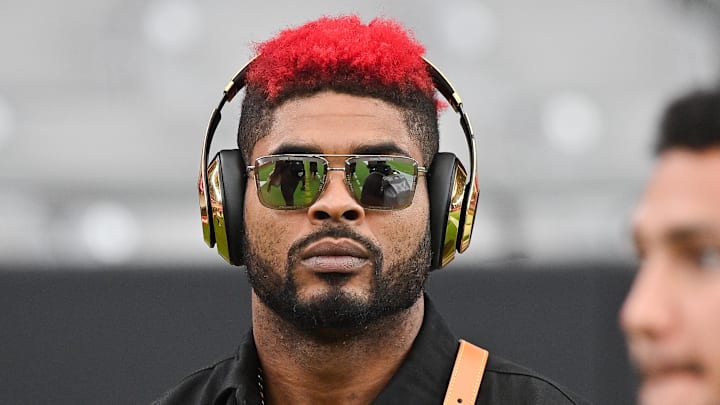
The Carolina Panthers have been floated as a logical landing spot for wide receiver Jauan Jennings throughout free agency. On paper, it makes sense. In reality, it’s exactly the kind of move they should avoid.
Jennings entered free agency coming off two productive seasons with the San Francisco 49ers, including a nine-touchdown campaign in 2025. For a physical, reliable possession receiver, that kind of production typically generates steady interest.
Instead, he’s still waiting.
According to Chris Simms of NBC Sports, the explanation is simple: Jennings priced himself too high early in free agency, and teams never bit. Rather than meeting his asking price, San Francisco pivoted entirely, bringing in Mike Evans and Christian Kirk instead.
Free-agent market told Carolina Panthers everything they needed about Jauan Jennings
That decision told the rest of the league everything it needed to know. And the silence that followed has been just as telling.
The Panthers’ connection isn’t random. They have a rising No. 1 receiver in Tetairoa McMillan and big potential with Jalen Coker, but the depth behind them is lacking. Adding a player like Jennings could, in theory, give quarterback Bryce Young a reliable safety valve.
But signing Jennings only works at the right price. And that’s where everything falls apart.
The Panthers aren’t operating with unlimited flexibility. With limited cap space, committing meaningful money to a complementary receiver is a risky bet. More importantly, the market itself is sending a clear message.
If Jennings were valued at his asking price, he wouldn’t still be available. Teams across the league have spent aggressively at wide receiver. The fact that the seventh-round pick hasn’t been part of that wave suggests a disconnect between his expectations and league-wide evaluation.
That’s exactly where bad deals happen. For a team like Carolina, still building toward something sustainable, that’s a mistake general manager Dan Morgan can’t afford. There’s also a layer to this beyond contracts and production.
Jennings plays with an edge — sometimes crossing the line. His on-field history includes altercations and a reputation for pushing boundaries, something the Panthers experienced firsthand in a heated matchup involving safety Tre'von Moehrig.
For a locker room being carefully shaped by head coach Dave Canales, that matters. Now, none of this is to say Jennings can’t help a team — he absolutely can. But the Panthers don’t need to be the team that bails him out after a misread market.
Sometimes free agency is about knowing when to strike. And sometimes, it’s about recognizing when the market has already made the decision for you. With Jennings, it looks like the second scenario.
 Add us as a preferred source on Google